
Vacuum tankers
3,500 gallons, for the largest traps and in-ground interceptors, cleared in one trip.

Traps and interceptors on a set cycle, pumped out whole and documented on the spot. We're the licensed hauler, and the waste goes to our own transfer station in Long Island City.
Tell us the address and what needs service. We'll get back to you with a quote.
A trap that gets skimmed instead of pumped fills back up in a week. We pump the full tank, scrape what's stuck to the walls, and leave the trap clean.
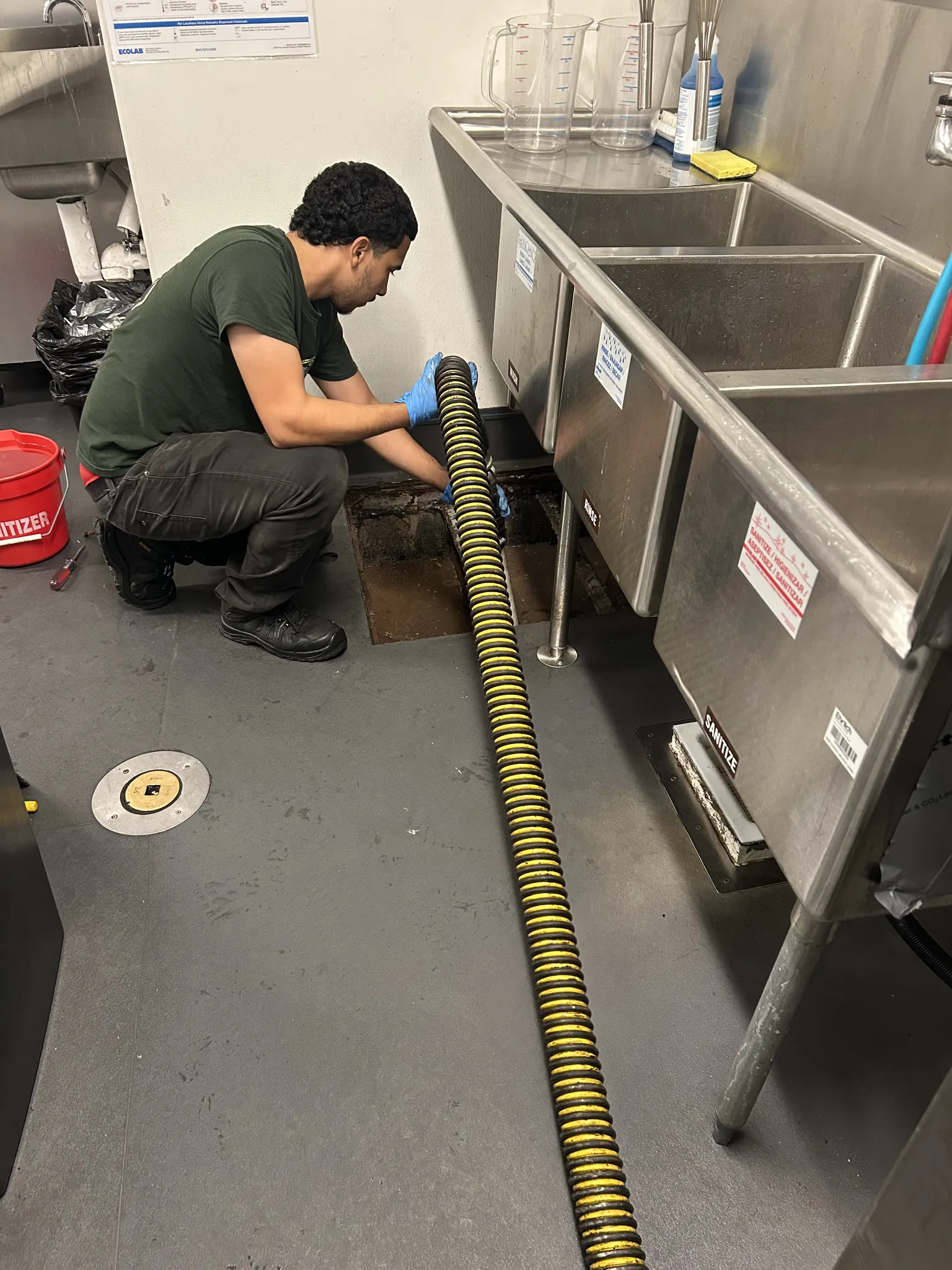
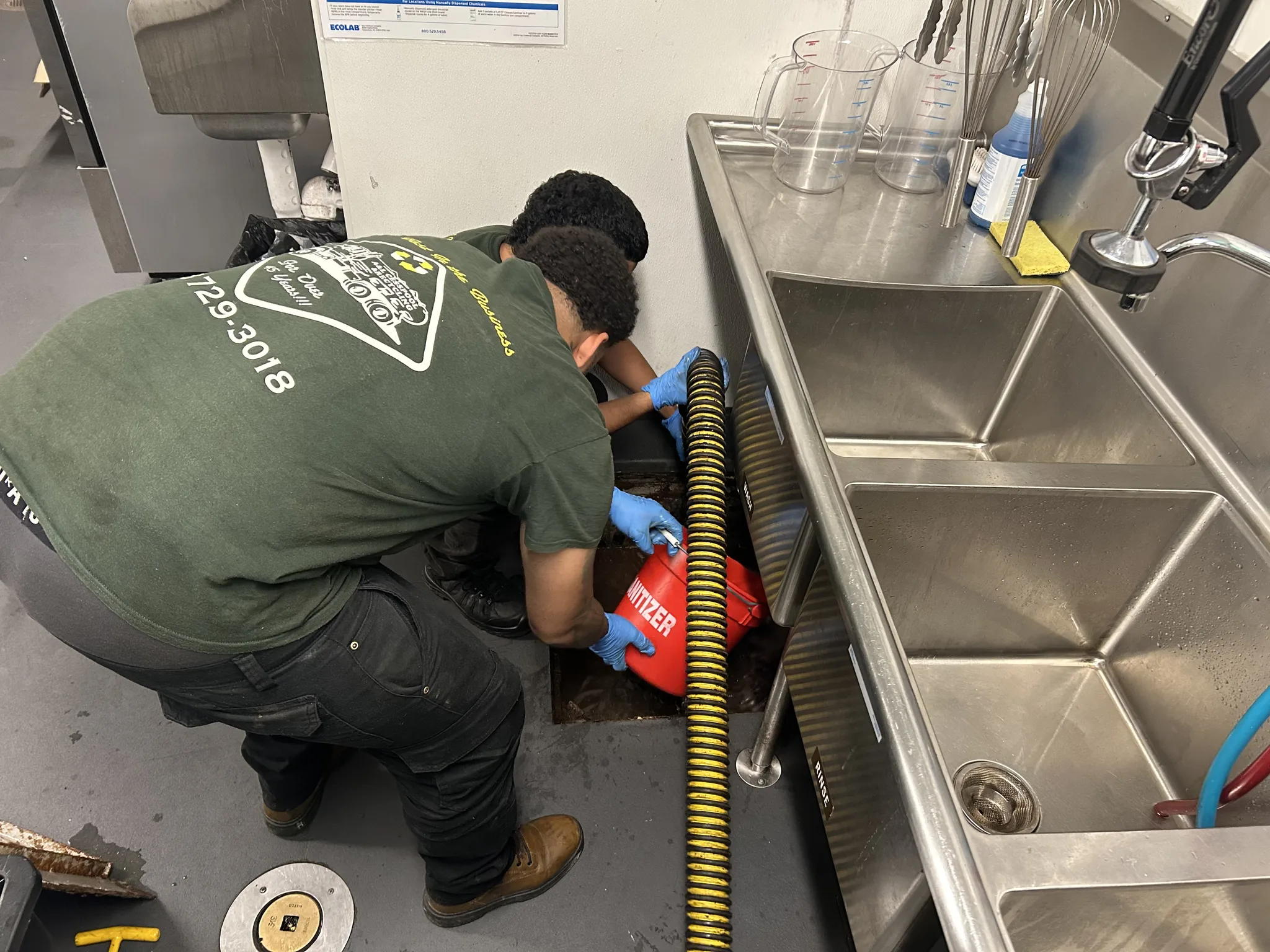
A trap lid should contain the odor from normal use. Rubber gaskets, silicone, caulk, screws, and caps wear out. We remove the damaged material and reseal the lid.
Bio-Snake Blocks help with grease and odor between service visits. Buy the product from us or ask the crew to include treatment with the trap service.
Tell us that when you call. An inspector wants to see records. Every job we run comes back with a dated manifest naming the location, the trap, and the hauler. Keep them in the binder and the next visit is short.
A fryer-heavy kitchen fills a trap faster than a coffee counter. We set the cycle off what we pull out on the first two visits, then it runs on its own. The rule of thumb the inspectors use: a trap stops separating once it's a quarter full.
Under-counter traps and the fry stations that never stop. The trap fills fast, so we come often.
Diners, fried chicken, burgers, anywhere the fry station runs all day.
Mixed menus and moderate covers, pumped before the trap gets near a quarter full.
Coffee counters, sandwich shops, and cafeterias with light cooking.
One scheduling note: routine grease trap cleaning doesn't run Sundays unless it's booked the day before. Emergencies are a different phone call.
Any size trap, any location, serviced the way you want it: by hose from a vacuum tanker, or by portable machine when a hose can't reach.
3,500 gallons, for the largest traps and in-ground interceptors, cleared in one trip.

Our 1,500 gallon tanker. Narrow streets, smaller traps, and the blocks where a full tanker can't get in.

Portable machines, dispatched on a box truck for the traps a hose can't reach: upper floors, kitchens with no street access, or when you'd rather not run a hose through the dining room.
A&L Recycling is our grease waste division. It runs the only grease waste transfer station in New York City, right here in Long Island City. Trap waste and used cooking oil come in, biodiesel feedstock goes out.
Nobody hauls your trap waste out of the city and bills you for the miles. The paperwork ends where the waste ends.

Kitchens, cafeterias, bakeries, delis, and supermarkets on a set cycle.
One call covers every location. Invoices come back per store.
Building portfolios and property managers, one schedule across the book.
We don't do plumbing. Hand us the trap work and keep the account.
“Juan and his team (Elvis and Ricardo) did a great job cleaning 3 grease traps. Very professional and always on time.”
“One of few companies willing to do the dirty work no one else wants to do, and consistently excellent. Contact them if you're looking for grease trap cleaning, oil drum removal or even a drain snaked. They're ready to go.”
“I called for my restaurant and within 3 hours they were there.”
Anywhere from weekly to every 90 days. Small traps and high volume kitchens run weekly or every two weeks; most others land at 30, 60, or 90 days. NYC expects a trap to be serviced before it's a quarter full, and a fryer-heavy kitchen gets there fast. We set the cycle off what we pull out on the first two visits.
Grease passes the baffle and hardens in your line. Then it's slow drains, odor, backups, and a failed inspection instead of a scheduled visit.
A trap stops separating grease once it's about 25% full. That's the trigger inspectors use, so it's the trigger we schedule against.
Yes, and small ones on the 40th floor. The 3,500 gallon tankers take the largest traps in one trip, the Silver Bullet works the narrow blocks a full tanker can't, and portable machines on a box truck reach any trap a hose can't. Any size, any location, serviced the way you want.
A dated manifest on every job naming the location, the trap, and the hauler. Service history stays on file; ask and we send the last twelve months.
Bio-Snake Blocks help with grease and odor between pumpouts. Treatment is an add-on, not a substitute for cleaning.
The lid may not be sealed. Gaskets, silicone, caulk, screws, and caps wear out in normal use, and a trap with a worn lid smells the day after it is pumped.
Call dispatch with the address and what's backing up. For scheduled service, send the quote form and we'll come back with the cycle.